
Audi Front End Clunking: A Fault That Builds Where You Can’t See It
Every suspension noise has a source. The ones that develop gradually are the ones that catch you out.
Your Audi has picked up a knock from somewhere in the front end. It’s there whenever the wheels roll over an uneven patch of road. Not loud enough to pull over. Just loud enough to notice.
You’ve been driving with it for a while. Some days it barely registers. Other days, every bump and drain cover seems to set it off.
The frustrating part is that a clunk from the front suspension could come from several different places. Anti-roll bar drop links, damper top mounts, ball joints; each one produces its own type of knock. Without knowing which component has developed the wear, it’s difficult to judge how urgently it needs attention.
On Audi A4, A5, A6, A7 and Q5 models from 2016 onwards with multi-link front suspension, Audi front end clunking can point to worn upper control arm bushings. On variants with fluid-filled bushings, the seal deteriorates over time, allowing excess movement in the control arm. A specialist technician assesses the full front suspension to confirm the source and plan the repair.
That’s what this page covers. How the upper control arm fits into the suspension, how the bushing deteriorates from the inside, which models are affected, what the noise sounds and feels like, and why having the front end assessed at Roade Main Garage, Northampton is the right move.
What Your Upper Control Arms Are Designed to Do
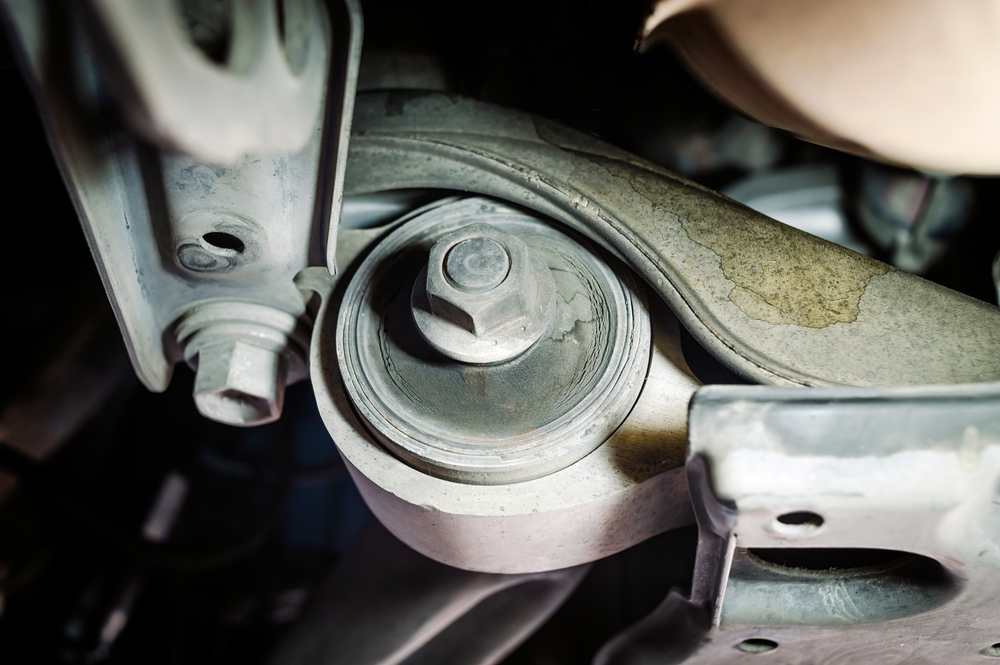
Most Audi owners don’t give much thought to what sits behind each front wheel. On models with multi-link front suspension, several individual control arms work together on each side. Each arm connects the wheel assembly to the subframe and helps manage how the wheel responds as the road changes underneath it.
The upper control arms sit above the rest. They help control the position and movement of the wheel hub as the suspension compresses and extends. The arms guide the wheel through a controlled path so that tyre contact with the road surface stays consistent.
At the point where each upper control arm meets the subframe, a bushing sits between them. Its job is to isolate vibration and control movement within the joint. When those bushings are in good condition, the front end feels settled and composed. When they’re not, the noise starts.
How the Bushing Wears From the Inside Out
Not all upper control arm bushings are solid rubber. On certain Audi suspension variants, the bushings use a sealed, fluid-filled chamber to isolate vibration and improve ride comfort. The fluid-filled chamber helps isolate vibration and smooth out movement from the road. The fluid acts as a cushion between the arm and the subframe, smoothing out the constant forces the suspension has to handle.
Over time, the seal that holds this fluid in place can deteriorate. Once it does, the fluid gradually escapes. Without it, the bushing can no longer control movement the way it was designed to, and the control arm starts to develop play.
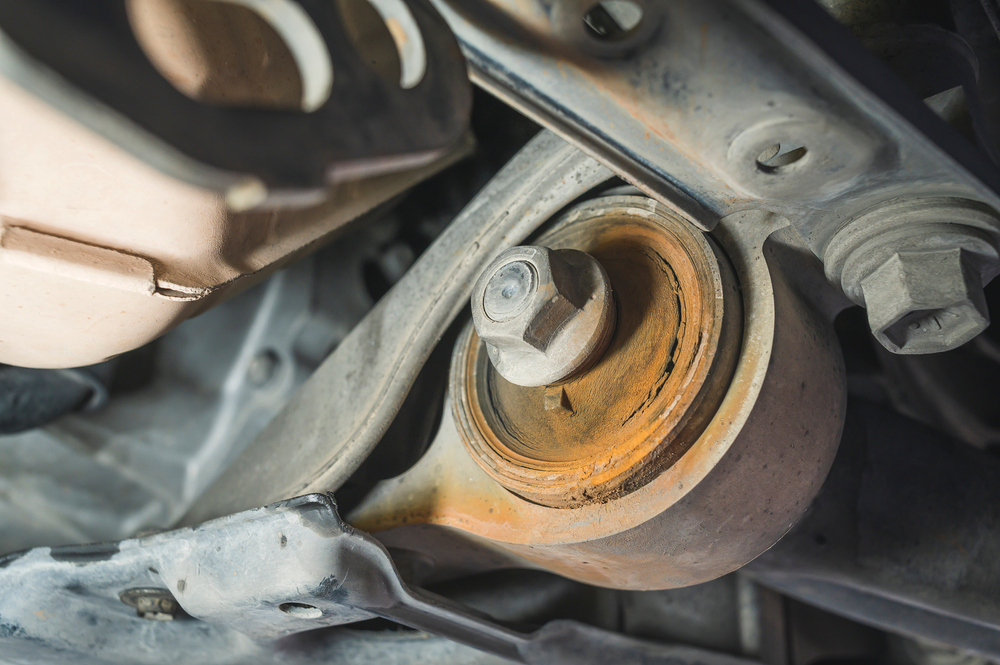
That play is what you hear as a clunking noise. Whenever the suspension compresses over a bump or rough surface, the arm shifts further than it should. The noise tends to grow worse over time rather than levelling off.
What makes this wear difficult to detect is that the rubber on the outside of the bushing can still look perfectly intact. The problem develops inside the sealed chamber, leaving no visible cracks or tears on the surface.
One of the few external clues is a residue around the bushing mount where fluid has seeped out. That’s one reason why a hands-on assessment by an experienced technician counts for more than a visual check alone.
The 2016+ Range: Which Audi Models Are More Prone To This Fault?
Not every Audi develops this issue, but there’s a recognised pattern across models from 2016 onwards that share a similar multi-link front suspension design. The ones where upper control arm bushing wear is reported most widely are:
- Audi A4 (2016 onwards)
- Audi A5 (2017 onwards)
- Audi A6 (2018 onwards)
- Audi A7 (2018 onwards)
- Audi Q5 (2017 onwards)
These five share a similar upper control arm and bushing design, and that shared layout is one of the reasons the same clunking symptom appears across the range. If you’ve noticed Audi A5 front suspension noise or something that sounds like Audi Q5 suspension clunk, a deteriorating upper control arm bushing is one recognised cause linked to this shared suspension architecture.
Bushing deterioration can occur on other Audi models too, but these five are where the pattern shows up most consistently. Whether it presents as Audi Q5 suspension clunk or a knock from an A6, the bushing design common to this group ties the symptom together.
What This Clunking Noise Sounds and Feels Like on the Road
So what does Audi front end clunking actually sound like from the driver’s seat?
Most owners describe it as a hollow knock that comes through the front of the car whenever the surface beneath the wheels breaks up. Speed humps, raised drain covers, patchy tarmac; they all bring the noise back. On smooth roads, it disappears.
If you’ve been searching for Audi A5 front suspension noise or asking yourself why does my Audi clunk over bumps, this type of upper control arm bushing wear is one documented cause across several 2016+ models.
There’s more to it than noise. Some owners notice the steering feels less precise than it used to. That happens when enough free play has developed in the bushing to let the control arm shift beyond its intended range.
Left unchecked, that excess play can start to affect how the car tracks and how evenly the tyres wear. If Audi front end clunking has been noticeable for a while, having the front suspension assessed at Roade Main Garage, Northampton is worth doing sooner rather than later. Worn bushings don’t settle back down, and the longer the movement continues, the more strain it places on surrounding components.
What the Assessment and Repair Process Involves
A front-end clunk doesn’t come with a label telling you which part is at fault. Anti-roll bar drop links, damper top mounts, and ball joints can all develop wear that produces a similar noise.
That’s where a thorough, hands-on assessment by an experienced technician makes the difference. At Roade Main Garage, Northampton, the technician goes through the front suspension step by step, checking each component for play, movement, and wear to pinpoint the source.
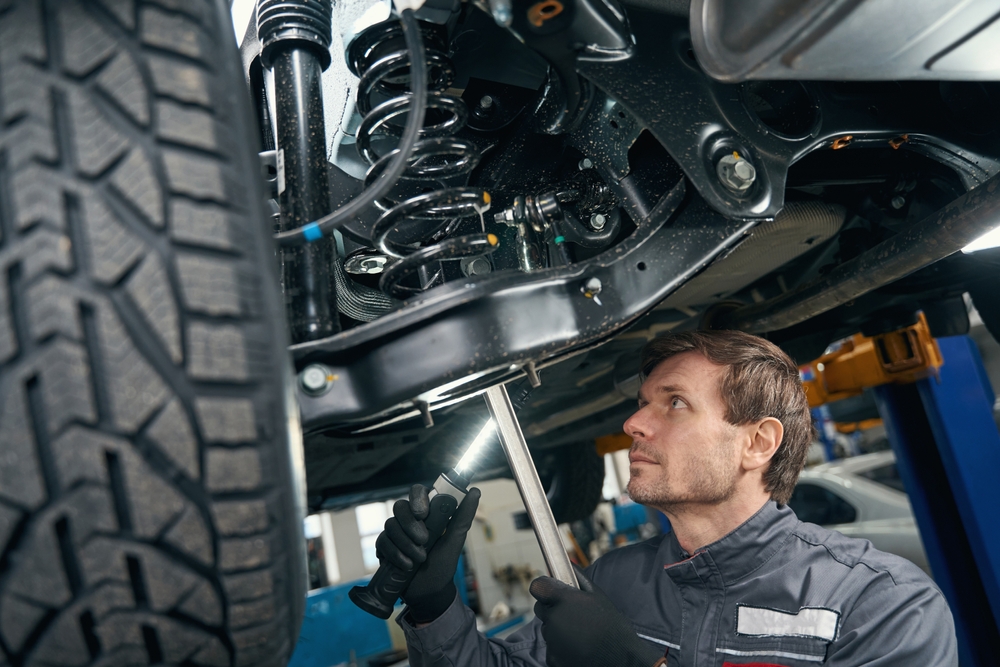
When the upper control arm bushings are identified as the cause, the next step is replacing the complete control arm assembly. Under manufacturer repair procedures, the bushing is not a separately serviceable component; the new arm comes with a fresh bushing and ball joint already fitted.
After fitting the new arms, the technician aligns all four wheels to return the suspension geometry to manufacturer standards.
Got questions about Audi A4 control arm bushing replacement, or want the front end assessed? The team at Roade Main Garage, Northampton will talk you through the process and costs before any work begins.
Why Trust Roade Main Garage, Northampton With Your Audi?
Identifying a clunking noise from the front is the first step. What matters after that is who assesses and repairs it.
Roade Main Garage, Northampton has built its reputation with Audi owners across Northampton and Milton Keynes through detailed, methodical suspension work. Here’s what you can expect:
- Technicians experienced in multi-link Audi suspension layouts who know where problems develop
- The correct tooling for a thorough front suspension assessment
- All work covered by a 12-month parts and labour guarantee
- Courtesy car options while your Audi is being worked on
A {{average-rating}} Google rating from {{review-count}} Northampton reviews; what stands out is the honesty and attention to detail.
Whether you’ve noticed the knock recently or it’s been building for a while, the team at Roade Main Garage, Northampton is here to help. Book a front suspension assessment and we’ll pinpoint the problem, explain what needs attention, and set out a clear plan.
FAQ
Does Audi A4 control arm bushing replacement require a wheel alignment?
Any time an upper control arm is replaced, it changes the front suspension geometry. That means Audi A4 control arm bushing replacement needs to be followed by a 4-wheel alignment to bring the geometry back to manufacturer standards. At Roade Main Garage, this alignment comes as part of the job, not as a separate charge.
Why does my Audi clunk over bumps?
A knock from the front end over bumps can stem from several different components. On Audi A4, A5, A6, A7 and Q5 models from 2016 onwards, upper control arm bushing wear is one recognised cause that shows a clear pattern across the range. If you’ve been asking why does my Audi clunk over bumps, having the front suspension assessed at Roade Main Garage is the most direct way to get an answer.
Can I keep driving with a clunking noise from the front suspension?
Worn suspension bushings allow excess movement in the control arm, which can gradually affect how the car handles and how the tyres wear. While the car may still feel driveable, having the front suspension assessed at Roade Main Garage, Northampton sooner rather than later helps prevent that excess movement from placing additional stress on other components.