
How Car Brakes Work: Your Braking System Uncovered
Every time you step on the brake pedal, the car responds. Smooth and immediate, something you rely on without a second thought.
That response comes from a hydraulic braking system connecting your foot to the wheels. Pressurised fluid travels to the callipers at each wheel, forcing brake pads firmly against spinning discs. The friction between pad and disc converts the car’s motion into heat, and the car slows down.
But every component in that system wears with use. The changes happen gradually, and they can go unnoticed for a long time.
At some point, you notice something isn’t quite the same.
The brake pedal feels softer than usual, there’s a noise when you brake that wasn’t there before, or a warning light appears on the dashboard.
Modern hydraulic disc braking systems are highly engineered, but the principles behind how car brakes work are easier to understand than many drivers expect. Pressing the brake pedal activates a brake booster that amplifies the force from your foot. A master cylinder then converts that force into hydraulic pressure, which brake fluid transmits through brake lines to the callipers at each wheel. The callipers push brake pads against spinning discs, and the friction between the pad and disc is what slows the wheel down. Most modern cars are also fitted with ABS to help prevent wheel lock-up during hard braking.
This guide focuses on hydraulic disc braking systems, the type fitted to most modern passenger cars.
If you’ve ever wondered, “How do disc brakes work?”, asked yourself, “How does ABS work?”, or wanted to know what a brake warning light means, this is your car braking system explained. It covers how car brakes work from pedal to wheel, and what to look out for as the system wears.
From Your Foot to the Wheels: How the Braking System Works
How car brakes work starts with the brake pedal. When you press it, the braking system amplifies the force from your foot and channels it to all four wheels.
Most modern passenger cars use a hydraulic disc braking system. Here’s how each stage of that process works:
1. Brake pedal: Your foot pushes down on the pedal, driving a rod toward the brake booster.
2. Brake booster (servo): The booster sits between the pedal and the master cylinder. Its job is to multiply your foot’s force, so the physical effort required from your leg is far less. Most vehicles use a vacuum-assisted design, though some newer cars have an electric booster.
3. Master cylinder: The amplified force reaches the master cylinder, where internal pistons pressurise the brake fluid, converting force into hydraulic pressure.
4. Brake fluid: A hydraulic fluid formulated to carry pressure through the system with very little compression.
5. Brake lines and hoses: A network of rigid pipes and flexible hoses routes the pressurised fluid from the master cylinder out to each of the four wheels.
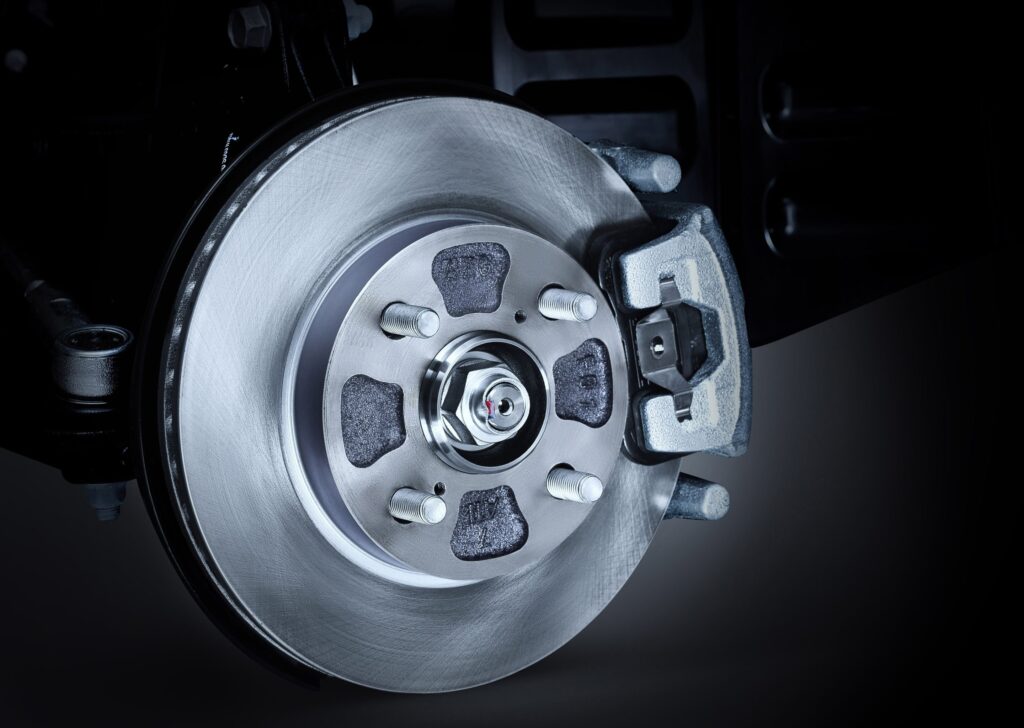
6. Brake callipers: At each wheel, the calliper housing sits over the brake disc. Pressurised fluid pushes the calliper’s pistons outward.
7. Brake pads: These sit inside each calliper and are made from composite friction materials: ceramic, semi-metallic, or organic compounds. They press firmly against the spinning disc to create friction.
8. Brake discs: Most are cast-iron plates attached to the wheel hub. As the pads press against them, friction slows the wheel.
All of that plays out in the time it takes your foot to travel a few centimetres.
That’s the car braking system explained at a fundamental level.
The harder you press the brake pedal, the more hydraulic pressure is generated, and the more firmly the pads press against each disc.
When you lift your foot off the pedal, the hydraulic pressure drops. The pads draw back from the disc, and the wheel turns freely again.
How Brake Discs Wear and Why It Makes a Difference
Disc brakes work on one core principle: friction. The pads press against the discs, and the friction between the two surfaces brings the car to a stop. If you’ve ever asked, “How do disc brakes work?”, that’s the essence of it.
Most brake discs are cast-iron plates fitted to the wheel hub at each corner of the car. Braking subjects the disc surface to repeated cycles of heat and friction, wearing the material down gradually over time.
As that wear accumulates, some drivers may experience:
• Surface scoring: Grooves or marks etched into the disc face by trapped debris, corrosion, or uneven pad wear. This can alter the contact between pad and disc.
• Uneven wear: Areas of the disc surface wearing at different rates. This can sometimes produce a pulsing sensation through the brake pedal when braking.
• Heat stress: Sustained heavy braking can generate enough heat to distort the disc or cause localised wear. The result may be a judder or vibration felt through the pedal or steering wheel.
A disc in poor condition affects braking consistency and reduces how effectively the pads make contact with the surface. The rate of wear depends on how you drive, road conditions, the amount of stop-start driving, and the type of friction material fitted.
If you’ve noticed any vibration or pulsing when braking, our technicians at Roade Main Garage, Northampton, can assess your discs and advise on the best course of action.
Brake Pads: How They Wear and What the Warning Signs Are
Every time you brake, the pads are the parts that press directly against the disc.
They’re often manufactured from a range of composite friction materials, including ceramic, semi-metallic, and organic-based compounds. Over time, this friction material wears away, and the pads eventually need replacing.
Modern vehicles may include one or more built-in warnings to flag when pads are wearing low:
• Audible squealer strip: A metal tab attached to the pad. When friction material wears down enough, the tab contacts the disc, producing a high-pitched metallic squeal as a warning.
• Electronic wear sensor: A sensor on the pad that is activated once wear passes a set threshold, triggering a light on the dashboard.
Not all cars have both systems. Some rely only on the audible indicator, while many other models also have the electronic sensor.
So when should you be thinking about when to replace brake pads? When you’re driving, worn brake pads can feel and sound like:
• A grinding or scraping noise when braking, especially at lower speeds.
• Braking that feels less responsive than it used to, or a change in the pedal feel.
• A brake warning light appearing on the dashboard, though this can also have other causes.
If pads aren’t replaced in time, they can wear down to a point where the disc surface is damaged, potentially leading to a larger, more costly repair.
Our technicians at Roade Main Garage, Northampton, can measure how much pad material is left and let you know whether replacement is needed now or whether the pads still have life in them.
How Brake Fluid Ages and What It Means for Your Brakes
Brake fluid’s job is to carry hydraulic pressure from the master cylinder to the callipers at each wheel. Every time you press the brake pedal, it’s this fluid that transmits the force through the braking system.
Over time, brake fluid absorbs moisture from the air around it. The system is largely sealed, but moisture can still enter through seals, joints, and flexible hoses in small amounts.
So why does this matter?
As moisture builds up, the fluid’s boiling point falls.
During hard or repeated braking, if areas of the fluid reach boiling temperature, vapour bubbles can form within the hydraulic circuit. Because vapour compresses far more easily than liquid, the brake pedal may feel soft or spongy, and braking performance can drop.
Moisture in the system can also encourage corrosion in callipers, brake lines, and other metal components.
That’s why most manufacturers recommend periodic brake fluid replacement.
How often depends on the vehicle and driving conditions, so it’s worth checking your owner’s manual or speaking to your garage. Brake fluid condition is an important part of braking safety.
At Roade Main Garage, Northampton, our team can test your brake fluid and advise on whether replacement is recommended.
How ABS Works and Why the Pedal Pulses
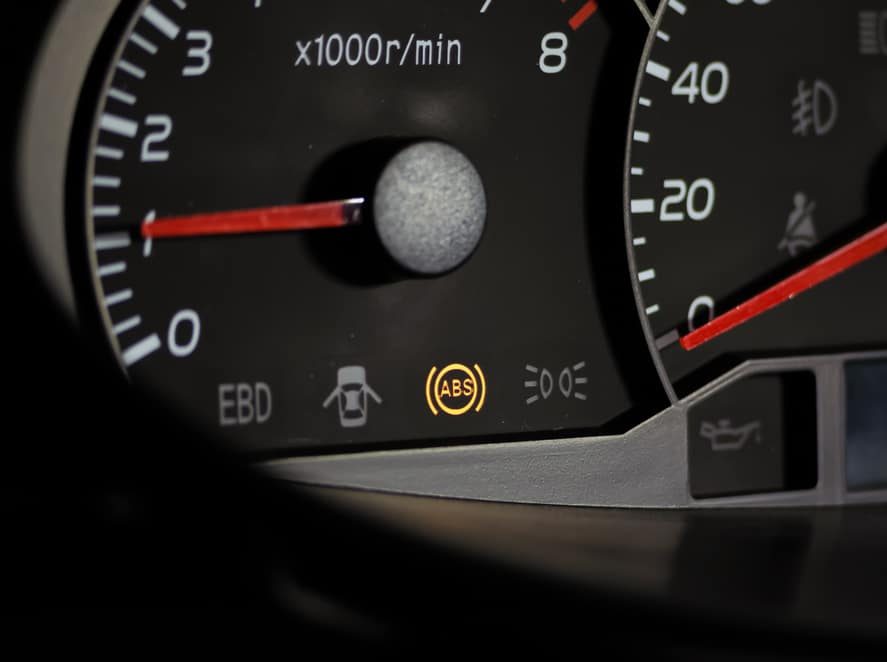
ABS stands for Anti-lock Braking System and is fitted to most modern passenger cars. If you’ve ever asked, “How does ABS work?”, it’s there to prevent the wheels from locking during hard or emergency braking, so you can maintain more steering control.
Without ABS, heavy braking can sometimes lock one or more wheels, especially on surfaces where traction is limited. A locked wheel can’t be steered, which is exactly the situation ABS is designed to prevent.
The system uses speed sensors at each wheel. When it detects a wheel beginning to lose traction under braking, it responds within milliseconds:
• It identifies that a wheel is decelerating so sharply it may be about to lock.
• It eases brake pressure to that wheel just enough to let it start turning again.
• It re-engages pressure almost immediately, cycling through this process many times per second.
And what does ABS feel like when it kicks in?
You’ll feel a rapid pulsing or vibrating through the brake pedal, and there may also be a clicking or buzzing sound from the system. Both are entirely normal and mean the system is working as intended.
If your ABS warning light comes on and stays on during normal driving, that’s a different matter. It means the system has detected a fault and needs to be assessed by a technician.
What Your Brake Warning Lights Are Telling You
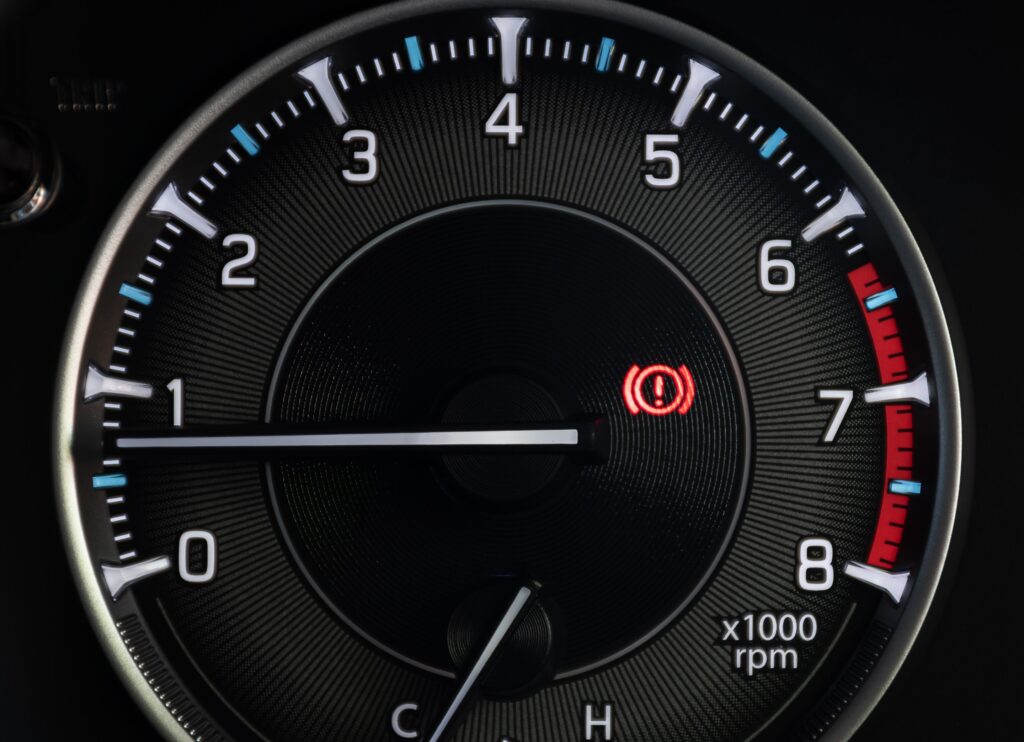
Most cars carry more than one brake-related warning on the dashboard, and each can mean something different.
Two of the most common brake warnings drivers see are:
• Brake pad wear warning: On vehicles fitted with one, this is activated by the electronic wear sensor once the pads wear past a set point. You don’t need to pull over immediately, but it should be treated as a priority and booked in as soon as you can.
• Handbrake or brake system warning: This can appear for more than one reason. It may illuminate when the parking brake is engaged, depending on the vehicle. But it can also indicate a system-level concern, such as low brake fluid or a sensor fault. If it remains on after you’ve released the parking brake, have it checked without delay.
• ABS warning light: If the ABS light stays on during normal driving, the Anti-lock Braking System has flagged a fault. Standard braking should still function, but ABS may not be available. Have it assessed by a technician as soon as you can.
If a brake warning light appears and you’re not sure what it means, drive cautiously, avoid heavy braking where possible, and follow your manufacturer’s guidance or contact your garage.
Any brake warning is worth taking seriously. Our expert technicians at Roade Main Garage, Northampton, can track down the cause and advise on the right course of action.
Why Regular Brake Inspections Should Be Part of Your Routine
Brake wear develops gradually. Pad material wears away over time, brake fluid absorbs moisture, and disc surfaces are subjected to heat and friction with every drive.
So what does a brake inspection typically include? As part of a full vehicle service, a brake check will cover pad thickness, disc condition, brake fluid quality, warning lights, and the condition of brake lines and hoses.
Your brakes are one of your car’s most important safety features. Keeping them in good working order protects you, your passengers, and everyone else on the road.
If it’s been a while since your brakes were last looked at, or if something doesn’t feel quite right when you press the pedal, that’s reason enough to have them checked.
Why Drivers Choose Roade Main Garage, Northampton for Brake Inspections, Servicing and Repairs
Your brakes are one of the most important safety systems on your car.
When it comes to having them inspected or repaired, you want to know the work is being done by people with the right knowledge and equipment.
At Roade Main Garage, Northampton, our expert technicians have the experience and dealer-level equipment to assess and service braking systems across a wide range of makes and models. We work to manufacturer standards and explain our findings before any work goes ahead.
When you choose Roade Main Garage, you benefit from:
• Experienced technicians with dealer-level equipment and manufacturer data.
• Transport options available while your car is being worked on.
• A 12-month parts and labour guarantee on all work carried out.
• Clear explanations before any work begins, so you know what’s needed and why.
Join {{review-count}} Northampton drivers who’ve rated us {{average-rating}} on Google for careful workmanship and honest, upfront communication.
Whether it’s a noise, a warning light, or a pedal that feels different, Roade Main Garage, Northampton, is here to help. Speak to our team on 01604 862262 to book a brake assessment.
FAQ
How do car brakes work?
Most modern cars use a hydraulic braking system to generate stopping force at each wheel. When you press the brake pedal, a braking-assist system amplifies the force from your foot. The master cylinder converts that force into hydraulic pressure, and brake fluid transmits it through brake lines to the callipers at each wheel. The callipers push the brake pads against spinning brake discs, and the friction between the pad and disc brings the car to a stop. Most modern cars are also equipped with ABS to help prevent wheel lock-up during hard braking.
How do I know when to replace brake pads?
There are a few signs that your brake pads may be wearing low and could need replacing. You might notice a high-pitched metallic squeal when braking, which is often the built-in wear indicator making contact with the disc. You may also find that the brakes don’t feel as responsive as they once did, or on vehicles with electronic wear sensors, a brake warning light may appear. Pads that have worn beyond their limit may need to be replaced before they damage the disc surface. If you’re noticing any of these, or you’re wondering when to replace brake pads on your car, booking a brake assessment with Roade Main Garage, Northampton, is a sensible next step.
Why does my brake pedal feel soft or spongy?
A soft or spongy brake pedal can often point to several possible causes. One is brake fluid that has absorbed too much moisture over time, lowering its boiling point and allowing vapour bubbles to form within the hydraulic system. It can also indicate air in the brake lines, a hydraulic leak, or a fault with the master cylinder. Any of these can reduce your car’s stopping effectiveness and should be investigated promptly. Our team at Roade Main Garage, Northampton, can test your brake fluid and assess the braking system.
What does it mean when the brake warning light comes on?
That depends on which brake warning light has appeared. A brake pad wear warning usually means at least one set of pads is nearing the point where replacement is recommended. A red brake system warning may indicate low brake fluid, a parking brake fault, or another system issue. If you’re not sure which warning you’re seeing, our technicians at Roade Main Garage can diagnose the cause and advise on what to do next.