

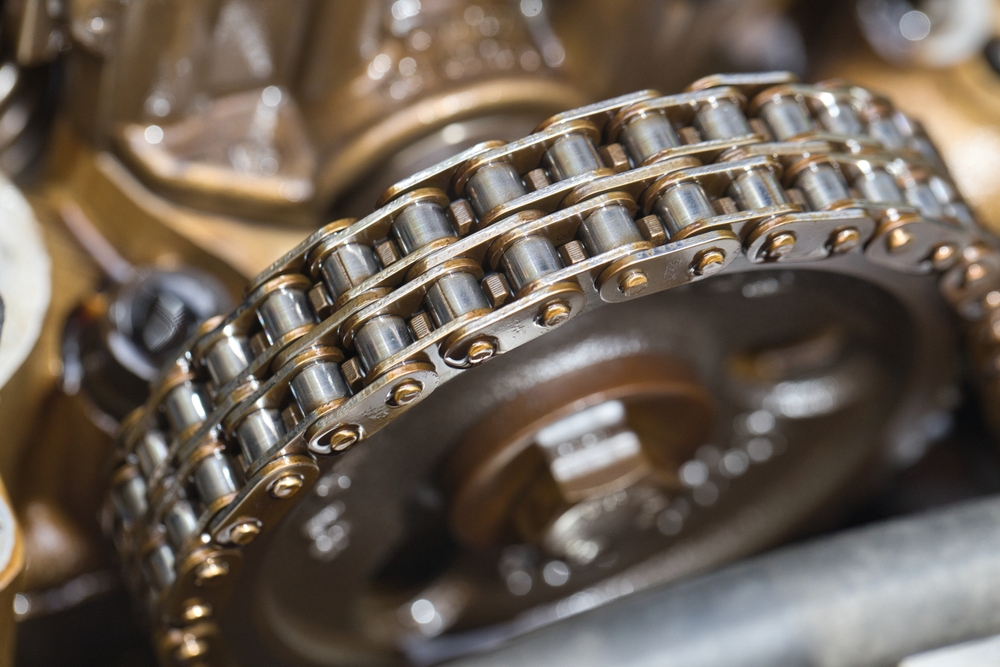
Mercedes Timing Chain Rattle: One Sound You Cannot Afford to Overlook
Did you know the timing chain inside your Mercedes diesel engine runs continuously from the moment the engine starts? When it is working correctly, it produces no sound at all. Most owners never give it a thought.

The first time most people become aware of the timing chain is the morning something changes. A metallic rattle appears the instant the engine fires. Brief, sharp, impossible to mistake for anything routine. Within seconds it fades, the engine settles, and the drive ahead feels completely normal.
That pattern continues. The same noise, every cold start, always at the same moment. No warning lights, no change in behaviour. A Mercedes timing chain rattle is the first evidence that internal wear has progressed to the point where at least one component in the timing chain assembly can no longer maintain tension silently. The tensioner, the guide rails, the chain; any of them could be the source. Pinpointing which one from the driver’s seat is not possible.
The information below applies specifically to the 2.0-litre OM654 diesel engine found in C-Class, E-Class, GLC, and GLE models from around 2016 onwards. Roade Main Garage, Northampton, works on this engine regularly, and timing chain system faults in the OM654 are well documented. If your Mercedes uses a different engine, different factors may apply, but any new noise is worth having assessed.
What causes a Mercedes timing chain to rattle? A Mercedes timing chain rattle is typically caused by wear within the timing chain system. Common causes include tensioner wear, guide rail degradation, and chain elongation. The rattle tends to be most noticeable on cold starts. Because multiple components can be responsible, a thorough technical evaluation is essential to identify the root cause before any repair work begins.
Inside the Timing Chain System: What Each Part Does
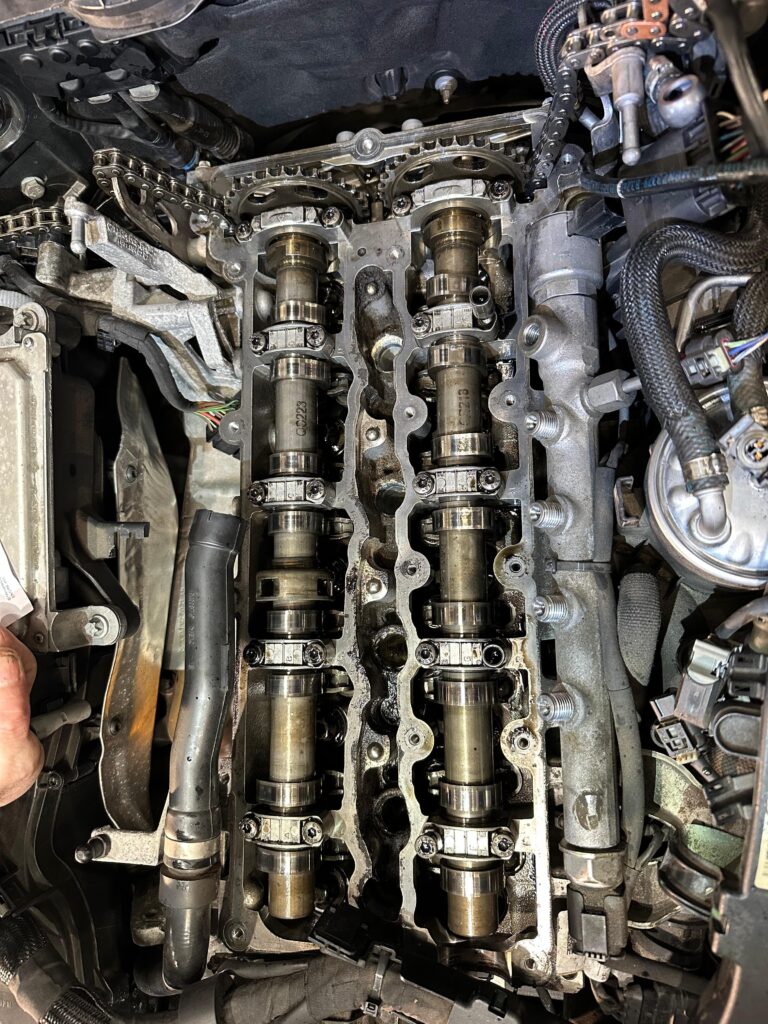
At the heart of the engine’s operation is timing. The crankshaft, driven by the pistons, generates rotational force. The camshafts open and close the intake and exhaust valves that manage airflow through each cylinder. These two groups must turn in precise coordination.
The timing chain links them. Running internally from crankshaft to camshafts, it transfers drive and maintains synchronisation through every engine cycle. Correct timing delivers the performance the engine was designed for. Disrupted timing creates mechanical conflict.
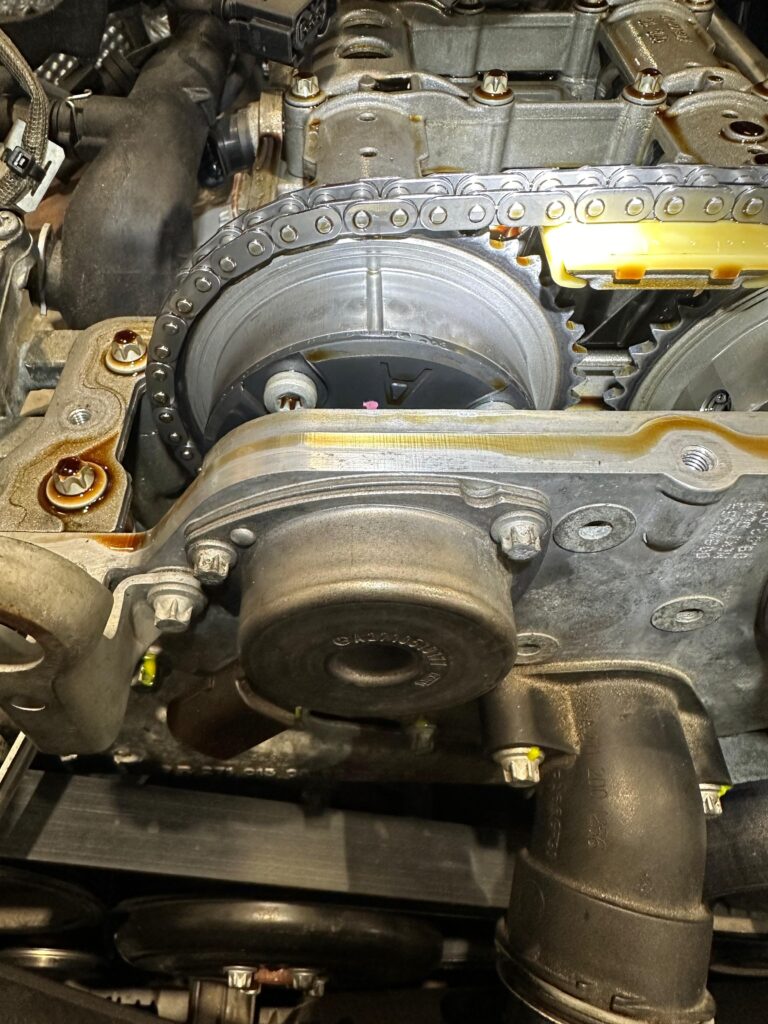
The chain is supported by a hydraulic tensioner that uses engine oil pressure to prevent slack, and guide rails that keep the chain on its intended path. Sprockets on both shafts engage the chain links to transfer drive. Wear anywhere in this supporting system gives the chain movement it was never designed to have, and that movement is what you hear at startup.
Why the Rattle Appears and Which Components Can Be Responsible
The rattle is a symptom, not a diagnosis. Several components within the timing chain system can produce the same outward sign, and each requires its own course of action.
- Tensioner wear. The tensioner holds oil inside its housing between startups to keep the chain under tension. A check valve or sealing surfaces perform this function. Degradation of those surfaces allows oil to escape overnight, so the chain runs without tension for the first seconds after ignition. Once oil pressure returns, the system compensates and the noise stops. That temporary loss of tension is behind a significant share of Mercedes timing chain noise cold start reports.
- Guide rail deterioration. The guides that channel the chain along its path are manufactured from plastic or composite material. Prolonged exposure to heat cycles and high mileage causes them to crack, become thin, or grow brittle. When a guide can no longer hold the chain on its designed trajectory, the chain gains freedom of movement and the noise follows.
- Chain elongation. Across tens of thousands of miles, the pins and bushings inside each link develop microscopic wear. The chain does not stretch in an elastic sense; it gains effective length as clearance increases at every joint. The tensioner extends further to compensate, but once the wear outpaces its travel, slack enters the system and remains until the chain is replaced.
- Oil quality and pressure. The entire timing chain system depends on clean engine oil delivered at the correct pressure. Extended service intervals or oil that has degraded in quality accelerate wear across every component simultaneously.
Now here’s where it becomes important to understand the interaction. A tensioner losing its grip allows the chain to move more freely, which in turn accelerates guide rail wear. Degraded oil amplifies the effect on every component at once. A thorough technical evaluation is essential to determine how many parts are involved and what the repair needs to address.
Hearing a Mercedes timing chain noise cold start each morning? Call Roade Main Garage on 01604 862262 and we can advise on the next step.
Telling a Timing Chain Rattle Apart From Other Engine Noises
Multiple engine components can produce sounds in the first moments after startup. Understanding what distinguishes a timing chain rattle helps you take appropriate action.
The hallmark is a rapid metallic chattering originating from the front of the engine. It presents most prominently on the first start of the day, after the engine has been idle for several hours. As oil pressure builds and the tensioner takes up slack, the sound fades within seconds.
What differs between vehicles is the quality of the sound. Some owners describe a light rhythmic tapping; others a rougher, more resonant metallic tone. That variation corresponds to which component has deteriorated and the extent of the wear.
So what does that mean in practice? If a metallic noise has appeared at startup that was not there before, the timing chain system is no longer maintaining tension within its designed parameters. A professional assessment is the only way to confirm the source.
Our technicians at Roade Main Garage can differentiate a timing chain system fault from other cold start noises, ensuring the actual cause is correctly identified.
If your Mercedes does not sound right on startup, get in touch with Roade Main Garage, Northampton.
The Consequences of Letting a Timing Chain Rattle Progress
Timing chain wear advances with every engine cycle. There is no stable plateau. Slack builds incrementally. A noise confined to the first cold start of the day begins appearing on warmer restarts, lasting longer, growing more distinct. Each cycle pushes the timing further from where it should be.
What makes it worse? Your Mercedes has an interference engine. The valves and pistons share the same physical space at alternating stages of the cycle. The timing chain is the only mechanism keeping them apart. If wear allows valve timing to shift beyond a safe margin, the valves and pistons collide. The result is bent valves, damaged pistons, and potentially a repair that exceeds the value of the vehicle.
The good news? A Mercedes timing chain replacement carried out before secondary damage develops is a well-understood repair for an experienced specialist, and costs a fraction of what a catastrophic failure would.
If you have started hearing that rattle, call Roade Main Garage on 01604 862262 before a contained repair becomes something far more costly.
Which Mercedes Diesel Models Are Most Commonly Affected?
The fault belongs to the engine, not to any particular model badge. The OM654 2.0-litre diesel engine has been fitted across a wide range of Mercedes vehicles since around 2016, and Mercedes diesel timing chain faults in this engine are well documented. The tensioner features prominently, but guide rails and the chain itself are also susceptible.
Roade Main Garage sees this fault most frequently in:
- C-Class (C200d, C220d, C300d)
- E-Class (E200d, E220d, E300d, E400d)
- GLC (GLC 200d, GLC 220d, GLC 300d)
- GLE (diesel variants)
This is not an exhaustive list. Any Mercedes sharing the same engine architecture can develop the same Mercedes diesel timing chain issues.
Roade Main Garage, Northampton, can confirm whether your Mercedes is at risk as part of a technical evaluation. We also serve Mercedes owners in Milton Keynes and the surrounding area.
How Roade Main Garage Approaches a Timing Chain Investigation
The noise points to the timing chain system. The question is which components have worn and how far. At Roade Main Garage, Northampton, every timing chain job begins with that question and does not move forward until it has been answered.
We start with your description. When you first noticed the noise, how it has developed, and how long it lasts all contribute to the direction of the assessment. These details matter because they shape the investigation before anything is dismantled.
A thorough technical evaluation follows, combining manufacturer software with hands-on inspection. The tensioner, guide rails, chain wear, and oil condition are all examined in a structured sequence to build a complete picture of what has deteriorated.
The bottom line? We present the findings with an itemised quote. No work starts without your approval. The repair addresses the worn components; chain, tensioner, guide rails, and associated parts as required. After completion, the engine is run-tested and the system verified.
A Mercedes timing chain replacement is a significant piece of work, but well understood by an experienced specialist. Caught before secondary damage develops, it protects the engine from far more serious consequences.
Why Mercedes Owners in Northampton Choose Roade Main Garage
Roade Main Garage, Northampton, provides the clarity you need when a timing chain rattle raises questions. We use dealer-level software with full access to Mercedes technical information to examine the timing chain system, and explain our findings in full before any work begins.
All timing chain repairs are backed by a 12-month parts and labour guarantee. Courtesy car options are available so you have transport while your Mercedes is with us, and our pricing remains competitive without compromising on quality. We serve Mercedes owners across Northampton, Milton Keynes, and the surrounding area.
With a {{average-rating}}-star Google average and {{review-count}} reviews, our customers’ feedback speaks to the quality of our work.
If you have noticed a cold start rattle, or your Mercedes does not sound the way it should, call Roade Main Garage on 01604 862262 today. The earlier it is assessed, the more contained the repair.
Frequently Asked Questions About Mercedes Timing Chain Rattle
What does a timing chain rattle sound like?
A rapid metallic chattering or tapping from the front of the engine, most audible on the first start of the day after the engine has been idle for several hours. The noise typically fades within seconds as oil pressure builds. If it has begun lasting longer or appearing more frequently, the wear may be progressing. A thorough technical evaluation at Roade Main Garage will confirm the source.
Can a timing chain rattle cause engine damage?
Yes. Your Mercedes has an interference engine, so the valves and pistons share the same space at different points in the cycle. If timing chain wear allows valve timing to shift beyond a safe margin, the valves and pistons can collide, causing serious internal damage. Call Roade Main Garage on 01604 862262 to arrange an assessment.
Will the entire timing chain system need replacing?
Not necessarily. The tensioner, guide rails, and chain are assessed individually during a thorough technical evaluation. Only the components that have worn are replaced, ensuring the work is targeted and nothing is overlooked.
Is transport available while the repair is being carried out?
Yes. Roade Main Garage offers courtesy car options so you have transport for the duration of the repair. We will confirm arrangements when you book in.