

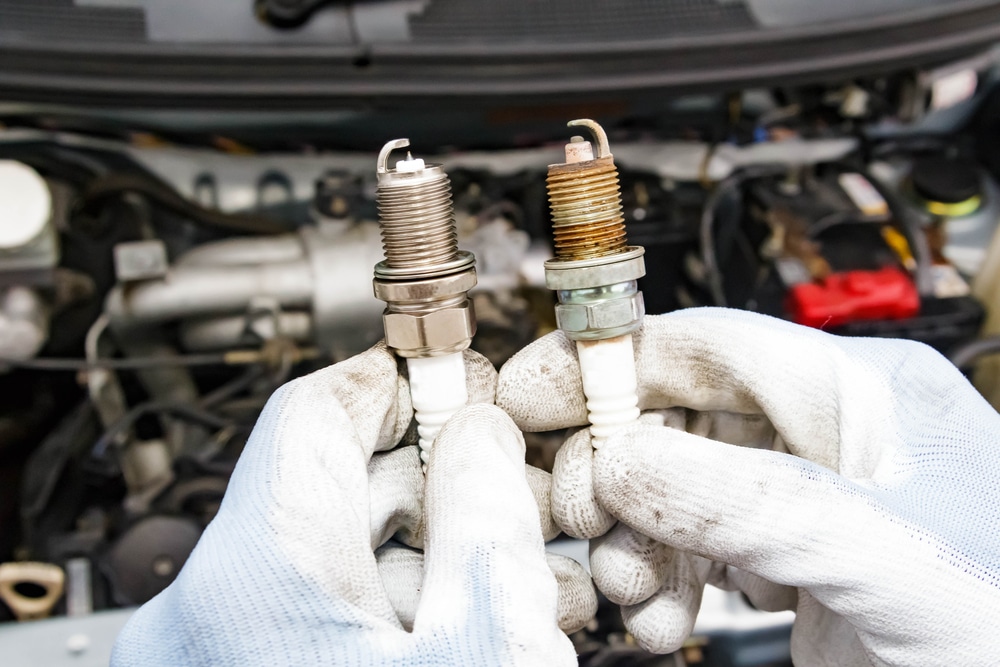
Spark Plugs: Tiny Components Your Engine Relies On
You may never have given your spark plugs a second thought. Most drivers haven’t. They’re hidden away under the bonnet, quietly doing their job, easy to forget about entirely.
But here’s the thing: without them, your engine produces nothing. No power. No movement. Nothing.
And when they start to fail? The signs creep in gradually. A rough idle here. A sluggish start there. Then one cold morning on the A508, your engine refuses to cooperate altogether. The recovery vehicle arrives. The repair bill lands. Suddenly, those overlooked little components have your full attention.
These parts are no bigger than your index finger, yet they’re responsible for every spark that keeps your engine alive.
Read on to understand why Northampton drivers should never take their spark plugs for granted.
What Role Do Spark Plugs Play in Your Engine?
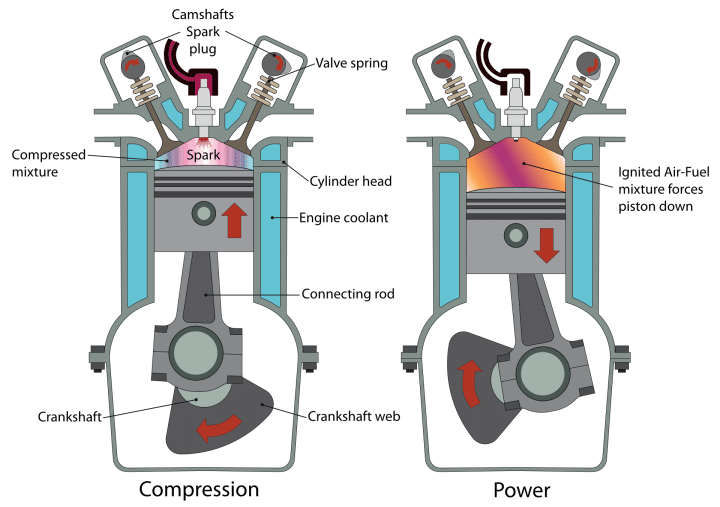
Beneath your bonnet, hundreds of engine components must cooperate with split-second precision. Sitting right at the centre of this is the spark plug; a small but vital device that produces thousands of sparks every minute, igniting the air and fuel mixture inside each combustion chamber.
Their size is deceptive. Spark plugs are fundamental to every petrol engine. You’ll find them in the cylinder head, threaded into the top of each cylinder. Four cylinders means four spark plugs. Six means six. Certain modern engines take it further with dual-spark technology, fitting two spark plugs per cylinder.
A useful comparison is the igniter on a gas hob. Turn the dial and it produces a spark to light the gas. Your spark plugs perform the same function inside your engine, but at extraordinary speed; each one must fire perfectly thousands of times every minute. If the timing is even slightly off, the fuel won’t ignite, the pistons stay still, and your engine stops dead.
The Right Spark Plug For Your Engine
Fitting the wrong spark plug to your engine is a mistake you’ll regret. Your vehicle was built to work with a precise type, and straying from that specification causes real problems. Here’s where plugs differ:
- Heat Range: This describes how fast a spark plug shifts heat away from its firing tip. Some plugs disperse heat quickly; others hold onto it. Choose incorrectly and the consequences range from lacklustre performance to severe engine and catalytic converter damage. It’s the most overlooked specification, yet arguably the most important. Always follow what the manufacturer recommends.
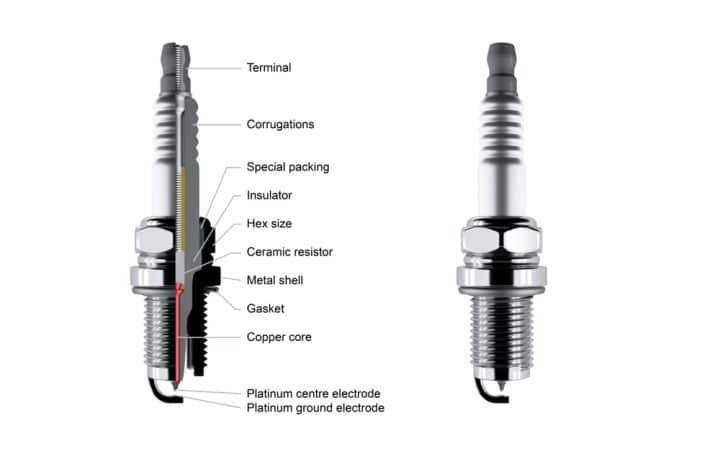
- Electrode Materials: Spark plug electrodes come in copper, platinum, or iridium. Copper offers strong conductivity but has a shorter life. Platinum provides better durability. Iridium costs the most but outlasts both, making it the longest-lasting option available.
- Design Variations: Thread size, reach (how far the electrode extends into the combustion chamber), and electrode layout all vary between spark plugs. Each dimension is engineered to suit a specific engine, ensuring correct combustion and efficient heat management.
Vehicle manufacturers determine the exact spark plug type your engine needs through rigorous testing. At Roade Main Garage, we fit only manufacturer-specified, high-quality (OEM[^1]) parts.
Choosing the right spark plug is essential, but correct installation matters just as much. A poorly fitted plug leads to engine trouble, weak performance, and a repair bill you’d rather not face.
Want to know which spark plug your vehicle needs? Ring Roade Main Garage on 01604 862262 for expert help.
Learn What Reduces Your Spark Plugs’ Lifespan
Your spark plugs won’t last forever. Several factors speed up their decline:
- Heat Range: Every spark plug must operate in a precise temperature band. Too cool, and carbon accumulates on the tip. Too hot, and fuel can ignite before the spark fires, a condition called pre-ignition that risks serious damage to engine internals. Manufacturers put significant research into selecting the right plug for each engine, so we always follow their specification without exception.
- Fuel Quality & Additives: Your choice at the pump matters more than you might think. UK fuel standards are generally solid, but some lower-grade fuels carry fewer cleaning additives, allowing carbon to build up on the electrode and insulator nose over time. Higher-octane fuels with effective cleaning agents help keep the combustion chamber cleaner and your spark plugs healthier for longer.
- Driving Patterns: Regular short journeys around Northampton, where the engine barely reaches operating temperature, force it to run fuel-rich. This encourages carbon deposits to form, gradually reducing spark plug effectiveness and leading to misfires, rough idling, and higher fuel consumption. An occasional longer drive, perhaps out towards Milton Keynes on the A508, helps burn off those deposits and extends plug life.
- Engine Conditions: Problems elsewhere in your engine have a knock-on effect. Oil finding its way past worn valve seals or piston rings into the combustion chamber, an air-fuel mixture that’s out of balance, or cooling system faults all compromise your spark plugs. Comprehensive servicing that covers all engine systems is the best way to protect them.
Identify the Warning Signs of Worn Spark Plugs
Failing spark plugs don’t stay hidden for long. Your vehicle will start telling you something is wrong:
- Performance Deterioration: This is often the first thing drivers notice. Acceleration becomes hesitant, power dips briefly, or the engine feels jerky under load. Rough idling is another common complaint. Because worn spark plugs can’t ignite the fuel and air mixture efficiently, fuel economy tends to drop as well. Leave it unchecked and repeated misfires risk damaging your catalytic converter, which turns a manageable service job into a far more expensive repair.
- Check Engine Light Activation: Modern engine management systems monitor combustion constantly. When spark plugs stop doing their job properly, these systems will often illuminate the check engine warning light on your dashboard as an early alert.
- Starting Difficulties: A car that’s becoming harder to start, especially on cold Northamptonshire mornings, may have spark plugs that can no longer produce a strong enough spark. This gets worse over time, and without attention, you’ll eventually turn the key to nothing at all.
Diagnosing the cause isn’t always straightforward, because these symptoms can point to other engine issues too. If you notice any of them, ring Roade Main Garage on 01604 862262 before a breakdown catches you off guard.
Our Spark Plug Replacement Process
Getting spark plugs replaced correctly demands the right tools, expert knowledge, and careful attention at every step.
We start by removing the engine cover to reach the plugs. Each old plug is then carefully extracted using a spark plug socket tool.
Before any new plug goes in, we confirm it matches the manufacturer’s specifications precisely. We verify the electrode gap with a feeler gauge too, because even a fraction of a millimetre out can affect how well the spark plug fires. The area around each cylinder opening is thoroughly cleaned to make sure no debris can fall inside. Every new plug is hand-threaded first to prevent cross-threading, then torqued to the exact setting your manufacturer stipulates. After reassembly, we run the engine and check that everything is performing as it should.
When this job isn’t carried out correctly, problems follow:
- Cross-threading can cause expensive cylinder head damage
- Debris entering the cylinder during installation risks internal engine harm
- Seized plugs can snap during removal, needing specialist extraction
- Wrong torque settings lead to compression leaks or thread damage
- Fitting incorrect plugs risks engine problems or catalytic converter damage
Our technicians at Roade Main Garage have extensive experience replacing spark plugs across all makes and models.
We use manufacturer-approved parts exclusively and keep our torque wrenches regularly calibrated. This precision means your vehicle leaves our Northampton garage running reliably and smoothly.
Stay Ahead of Spark Plug Failure
Putting off spark plug replacement feels like a sensible saving until it isn’t. The few pounds you hold onto now can multiply into a far larger bill when failure strikes, and it typically happens at the worst moment; stuck on the M1 in traffic or late for something important.
When Should You Replace Your Spark Plugs?
It depends on the type fitted to your engine:
- Iridium-tipped plugs carry a higher price tag but deliver the longest service life
- Copper-core plugs cost the least upfront, but their electrodes wear faster, so they need replacing more often
- Platinum-tipped plugs sit between the two, offering good durability at a moderate cost
The crucial point is that the choice isn’t yours to make. Your vehicle’s manufacturer specifies which plug type your engine requires, and fitting anything else risks performance issues and possible engine damage.
Following the manufacturer’s replacement schedule isn’t optional; it’s your best insurance against costly surprises. At Roade Main Garage, we stick to these guidelines without compromise. The risk simply isn’t worth it.
Challenge These Common Spark Plug Myths
Over the years serving Northampton and Milton Keynes drivers, our team at Roade Main Garage has heard its share of spark plug misconceptions. Here are the ones that come up most:
“All spark plugs are the same.”
They absolutely aren’t. Spark plugs are manufactured in different types, including copper, platinum, and iridium, each with specific heat ranges and electrode configurations engineered for particular engines. Fitting the wrong plug can compromise performance, increase fuel consumption, and risk engine damage. Manufacturers select a specific plug for your engine based on its compression ratio, combustion chamber design, and operating temperature. There’s nothing interchangeable about it.
“Spark plugs last forever.”
A dangerous assumption. Today’s spark plugs are certainly more robust than earlier designs, but they remain wear items with a finite life. Thousands of electrical discharges per minute, extreme heat, and combustion residues all gradually erode the electrode. Even premium iridium plugs eventually reach the end of their useful service. Sticking to your manufacturer’s replacement intervals is the only reliable way to keep your engine performing well.
“Spark plugs only affect starting the engine.”
This misunderstanding is surprisingly common. Spark plugs work continuously from the moment your engine starts until you switch it off. They fire hundreds of times per minute throughout every journey, maintaining the smooth, efficient combustion that keeps you moving.
“If one spark plug is bad, only that one needs replacing.”
It sounds economical, but it usually costs more in the long run. Spark plugs deteriorate at roughly the same rate, so when one fails, the rest are typically not far behind. That’s precisely why manufacturers recommend replacing the complete set together. One visit, one job, and you’re sorted.
Get Professional Spark Plug Advice Today
Staying proactive about your spark plugs is always cheaper than dealing with the consequences of neglect. Don’t wait until failure forces your hand; by that point, the bill is always bigger.
At Roade Main Garage, we put prevention first. We offer:
- A {{average-rating}} star Google rating from {{review-count}} satisfied customers
- Transparent pricing and outstanding value
- A comprehensive 12-month parts and labour guarantee
- Trained technicians with specialist tools for precise spark plug inspection and replacement
- Courtesy car options available while your vehicle is with us
- A commitment to only using genuine or high-quality OEM parts
Our team prioritises your vehicle’s reliability, your safety on Northamptonshire’s roads, and your peace of mind behind the wheel.
Don’t leave your engine’s health to guesswork. Ring us on 01604 862262 with any questions about your vehicle. Our friendly experts at Roade Main Garage are ready to help keep you safely on the road.
[^1]: OEM stands for Original Equipment Manufacturer. When it comes to vehicle parts, this means the parts are made by the same company that produced the original parts for the vehicle manufacturer
