

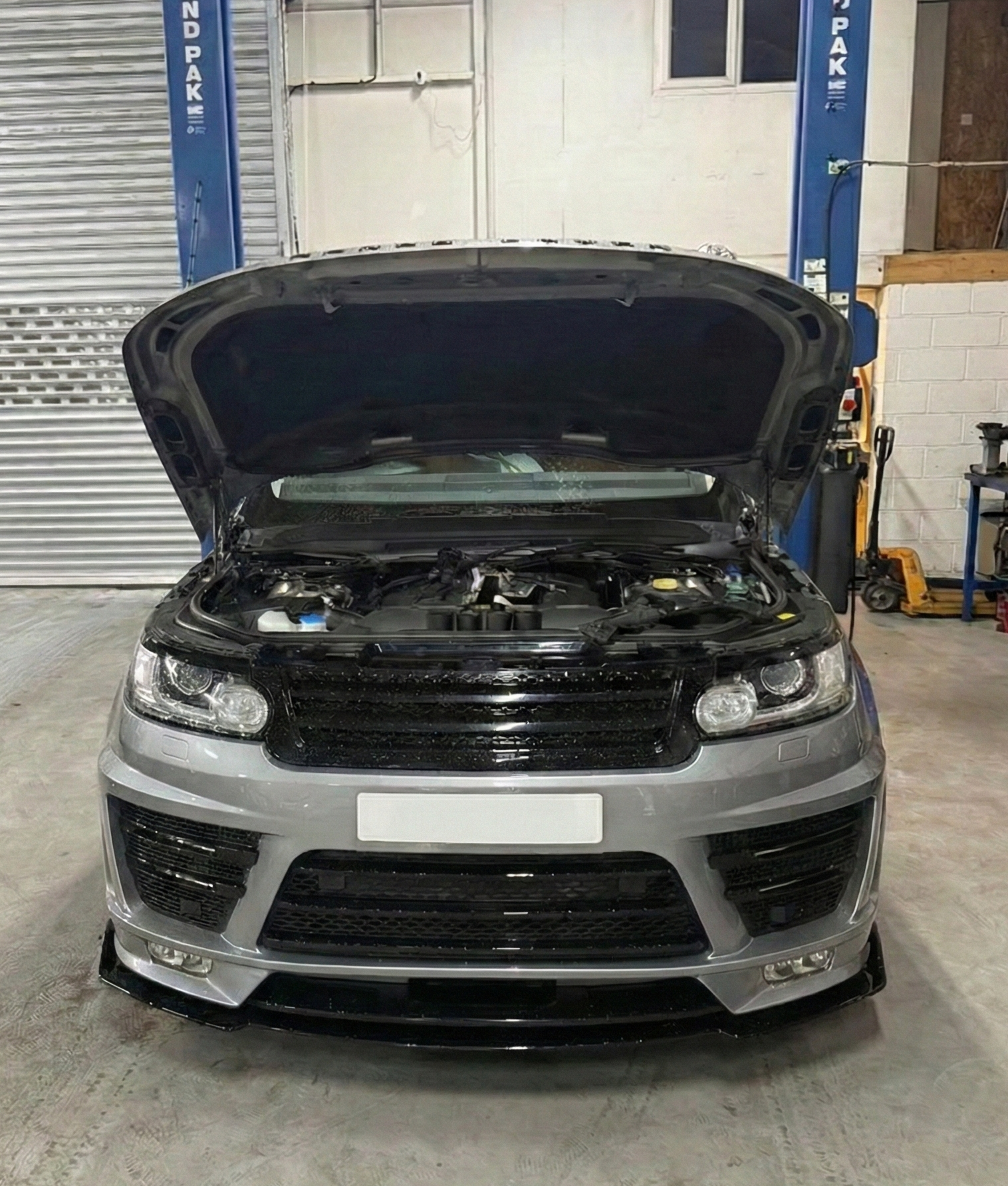
Land Rover Fault Code C1A20-64 Diagnosed During Brake and Suspension Assessment
When something doesn’t feel right with your car, it’s not always easy to pin down why. In this case, Mr G’s Range Rover Sport was showing two concerns that didn’t appear to be connected at first glance: a noticeably hard brake pedal and a suspension warning limiting the vehicle to normal height only.
The brake pedal issue was most apparent first thing in the morning, after the vehicle had been left standing overnight. There were no brake warning lights on the dashboard, but the change in pedal feel was obvious enough to raise concern. Alongside this, an intermittent suspension message was appearing, restricting height adjustment and leaving Mr G unsure when the issue might return.
With braking and suspension both playing a critical role in safety and control, it was important to understand exactly what was happening beneath the surface. Rather than risking the problems developing further, Mr G booked the vehicle in with the team at Roade Main Garage for a structured technical evaluation, allowing both issues to be assessed properly and in full.
Once the initial concerns were discussed, the investigation could begin.
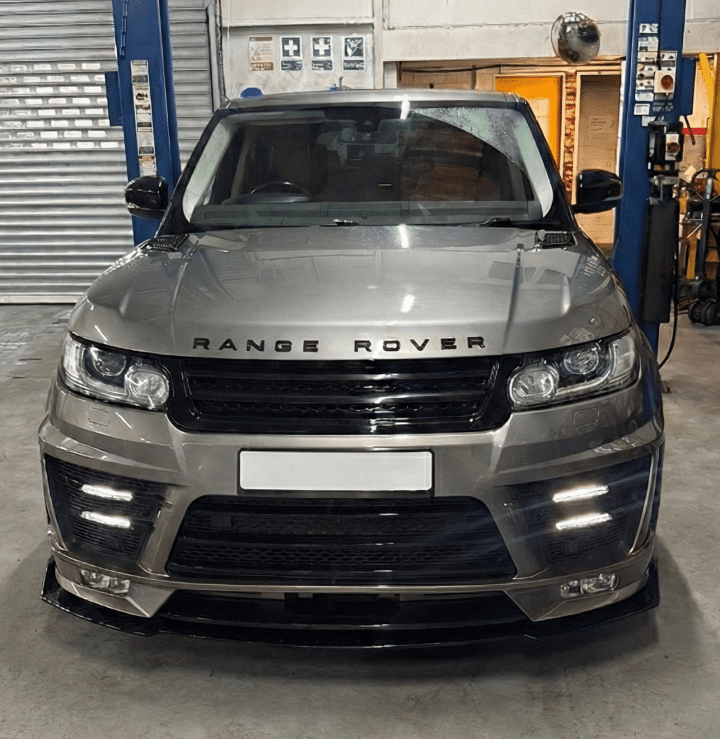
Reviewing the Suspension Warning and Brake Pedal Symptoms
When Mr G’s Range Rover Sport was brought into Roade Main Garage, the starting point was to verify the symptoms exactly as they had been described. With the vehicle cold after standing overnight, the brake pedal was checked and the unusually firm response was confirmed. The suspension system was then assessed and found to be restricted to normal ride height only, aligning with the warning message Mr G had reported.
This confirmed that the issue was not an intermittent message alone, but an active Land Rover suspension fault that required further investigation.
Dealer-level diagnostic equipment was then connected to the vehicle to review the information stored by the control modules. During this initial scan, a suspension-related fault code was identified:
- Land Rover fault code C1A20-64 – air suspension reservoir pressure increases too slowly
This showed that the system was not building reservoir pressure within the expected time, which explained why height adjustment was being limited.
Even so, this finding did not explain the underlying reason for the pressure delay. In addition, no fault codes were present for the braking system, despite the change in pedal feel that had been confirmed during testing.
At this stage, the reported concerns were clearly defined, but further investigation was needed to establish why the faults had developed. A deeper, structured inspection was therefore required.
Identifying the Root Cause of the Suspension Pressure and Brake Issues
With both braking and suspension concerns identified, our technicians began a structured inspection to establish the root causes.
Step 1: Checking the suspension system for air loss
With Land Rover fault code C1A20-64 logged, the next step was to understand what was behind the reported pressure delay. A Range Rover Sport suspension problem like this can have several underlying reasons, so further testing was essential.
One possible cause of slow pressure build-up is air escaping from the system. To rule this out, our technicians carried out a structured inspection and leak test of the air suspension components and associated pipework.
No external air loss was detected during testing, allowing us to move on knowing the system was retaining pressure as it should.
Step 2: Assessing compressor performance
With no evidence of air loss, attention turned to the air supply itself. We tested how effectively the compressor was able to build and supply pressure to the suspension system.
Testing showed that the compressor was unable to raise reservoir pressure within the expected time, meaning it could not support normal suspension operation. When this happens, the control system limits height adjustment, which matched the warning message Mr K was seeing.
This pointed to a Range Rover air compressor fault, rather than air loss elsewhere in the system.
Step 3: Investigating the hard brake pedal
A Land Rover hard brake pedal was also investigated alongside the suspension fault, directing attention towards the brake vacuum assistance system rather than the hydraulic braking components. This type of symptom directed our attention to the brake vacuum assistance system, rather than the hydraulic side of the brakes.
We recreated the issue and checked the vacuum supply against expected values. From there, we worked through the components responsible for creating and retaining vacuum assistance, isolating each section to identify where vacuum was being lost.
The conclusion: Two faults confirmed through testing
By the end of the diagnostic process, we had clear, evidence-backed answers for both concerns.
- The suspension warning and Land Rover fault code C1A20-64 were traced to an air suspension compressor that could no longer build pressure at the rate required by the system.
- The hard brake pedal was caused by a failing brake assistance servo, which was allowing vacuum to deplete while the vehicle was parked.
With both faults confirmed through structured testing, we could move on to the repair stage, knowing exactly what needed to be addressed.
Completing the Required Repairs to Restore Brake and Suspension Operation
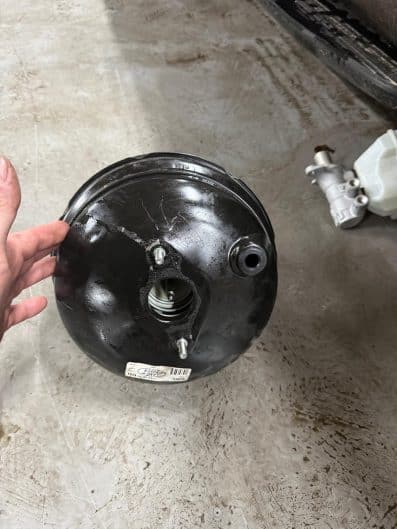
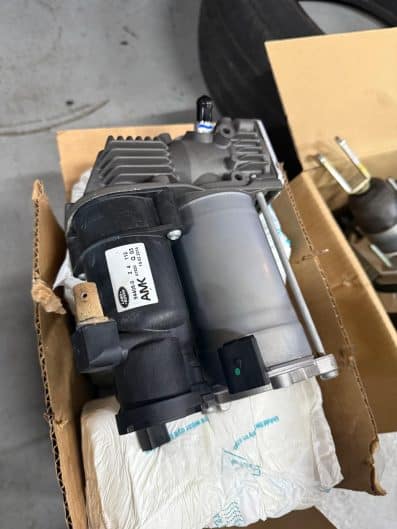
With both faults confirmed through structured testing, the next stage was to carry out the required repairs using the same methodical approach. Each repair was completed in line with manufacturer procedures to ensure the underlying causes were addressed without introducing secondary issues.
Brake Assistance Servo Replacement
Access to the brake assistance servo was gained following manufacturer guidance, allowing the unit to be removed without disturbing the hydraulic braking system. The faulty servo was then removed and replaced with an OEM-quality unit, ensuring all mounting points and connections were correctly seated.
Once installed, the vacuum connections were refitted and checked to confirm the system was fully sealed. The brake pedal was then assessed to ensure brake assistance had been restored and that pedal response was consistent and as expected.
This approach ensured the braking concern was resolved at source, without affecting other components within the braking system.
Air Suspension Compressor Replacement
With the braking repair complete, attention turned to the suspension system. The faulty air suspension compressor was removed and replaced with a new unit, following manufacturer-approved procedures throughout.
All airline connections were refitted carefully to ensure the system could build and retain pressure once returned to operation. Dealer-level software was then used to reset the suspension system and restore normal functionality.
Suspension response was checked to confirm that height adjustment was available again and that the system was no longer operating under restriction.
Final Checks
Before the vehicle was returned, both systems were reassessed to confirm the repairs had been successful. The braking system was checked first to ensure consistent pedal assistance was present, followed by suspension checks.
Once this was complete, the stored Land Rover fault code C1A20-64 was cleared so the vehicle could be evaluated under normal operating conditions. The suspension system was then rechecked to confirm full height adjustment was available and no warning messages returned.
A road test was carried out to verify performance away from the workshop environment. This confirmed that both the brake and suspension concerns had been resolved.
The Outcome Following Accurate Diagnosis and Repair
With the repairs completed and final checks confirming correct operation, Mr G’s Range Rover Sport left Roade Main Garage in a noticeably improved condition. The brake pedal had returned to a normal, consistent response, addressing the concern that had been most noticeable after the vehicle had been left standing overnight.
At the same time, the suspension warning message was no longer present. The suspension system was able to build reservoir pressure within the expected timeframe again. The underlying Land Rover air suspension issues were fully resolved.
By booking the vehicle in with Roade Main Garage, Mr G benefited from a structured technical evaluation that identified both faults accurately before any repair work was carried out. This ensured the correct components were addressed first time, without unnecessary work or disruption.
With both issues resolved during a single visit, the vehicle was returned in a dependable condition, allowing Mr G to drive away with confidence that the braking and suspension systems were operating as intended.
Suspension or Brake Concerns? Speak to the Team at Roade Main Garage
If your Land Rover is displaying warning messages, driving differently, or giving you concerns you’re not comfortable ignoring, it’s important to have it assessed properly. Issues affecting braking or suspension require a structured technical evaluation to prevent further complications.
By choosing Roade Main Garage, you benefit from:
- Technicians experienced in identifying complex Land Rover faults
- A clear, evidence-led approach to technical evaluation
- Repairs carried out using OEM-quality parts
- A 12-month parts and labour guarantee for added reassurance
Roade Main Garage is rated {{average-rating}} stars on Google, based on {{review-count}} customer reviews, reflecting the care and attention given to every vehicle that comes through the workshop.
If something doesn’t feel right with your Land Rover, call 01604 862262 and speak to the team at Roade Main Garage today.
