
How Does Car Suspension Work? What Wears and Why It Matters
You’re driving along a residential street near Northampton when a speed bump produces a dull knock from underneath the car. It’s not sharp, not loud, but enough to make you pay attention.
You ease off and listen, and a quarter mile on, another pothole triggers it again. The same knock, from the same spot.
That sound is worth taking seriously. It could mean a suspension component beneath your car has started to wear…
The trouble is, suspension wear doesn’t announce itself. It creeps in over weeks and months. You adjust to the changes without realising how much things have drifted from where they should be.
A knocking sound when driving over bumps, a pull to one side, steering that’s lost its edge… by the time you pick up on them, wear has been developing for a while already.
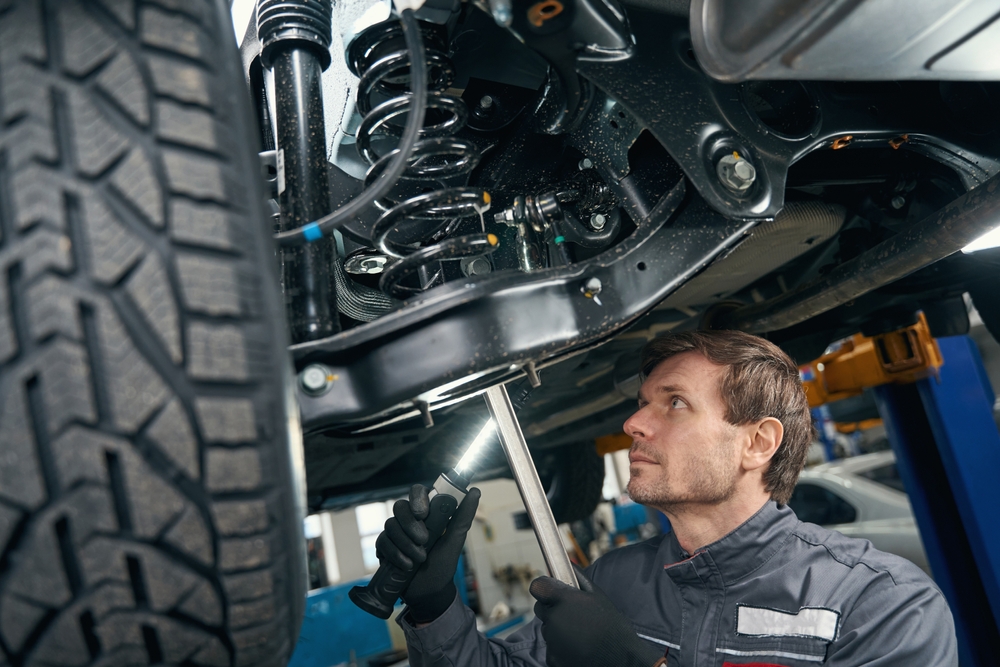
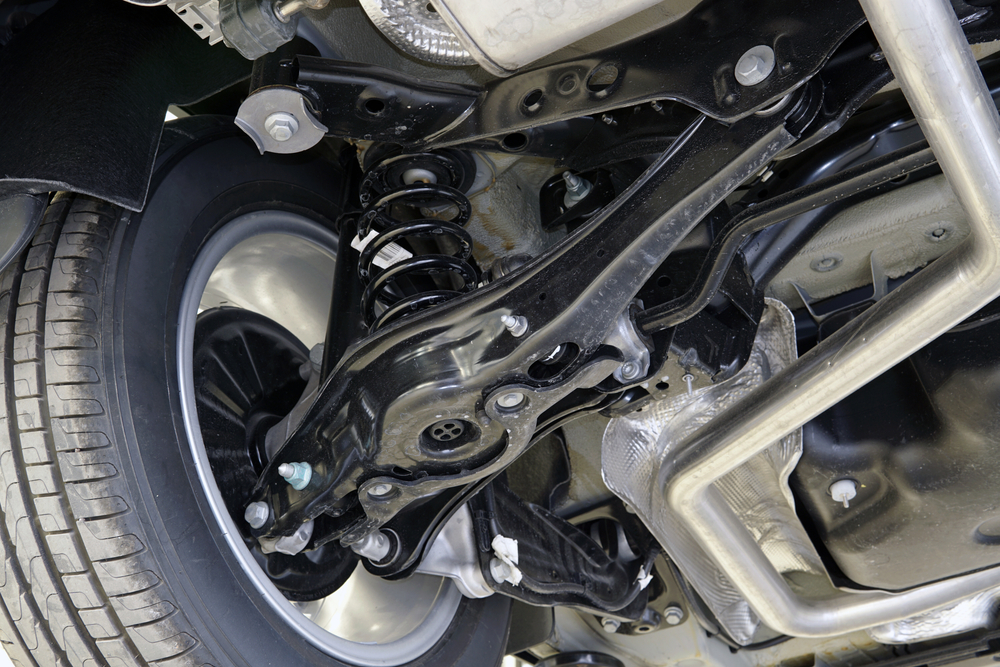
Your car’s suspension connects the wheels to the body and helps control how the vehicle responds to uneven road surfaces, keeping the cabin stable and the tyres in contact with the road. It’s made up of several components, including springs, shock absorbers, control arms, and bushings, each of which wears gradually, which means issues can develop without a sudden warning.
So, how does car suspension work?
What follows covers every key component, what each one does, and what happens as it wears. It also walks through the car suspension problems and symptoms that tell you something has changed, and what the MOT checks for.
Whether an advisory flagged something, the car doesn’t feel right, or you want to understand what’s going on before speaking to a garage, this is a solid starting point.
What Does Your Suspension Actually Do?
Potholes, expansion joints, patched tarmac… every road has imperfections, and without a suspension system sitting between the wheels and the body, every single one of those would transfer through the chassis and into you.
What does car suspension do?
Your vehicle’s suspension manages how the car responds to those imperfections. It keeps your tyres pressed to the road, holds the cabin steady, and gives you a platform stable enough for confident steering and braking.
Three functions define what the system delivers:
- Road Impact Control. Compression through the spring and damper helps control the force of each impact before it reaches the cabin.
- Tyre Contact. The system keeps each tyre pressed to the road surface as the wheel moves over uneven ground.
- Stability. The suspension controls body roll through corners, nose dip under braking, and squat under acceleration.
When it’s all working, you don’t notice it; your vehicle’s suspension system works in the background. The moment wear sets in, that changes. You start feeling the road more, the ride feels less composed, and that gap between “working” and “worn” is what this guide is about.
Springs and Shock Absorbers: The Pair That Does the Heavy Lifting
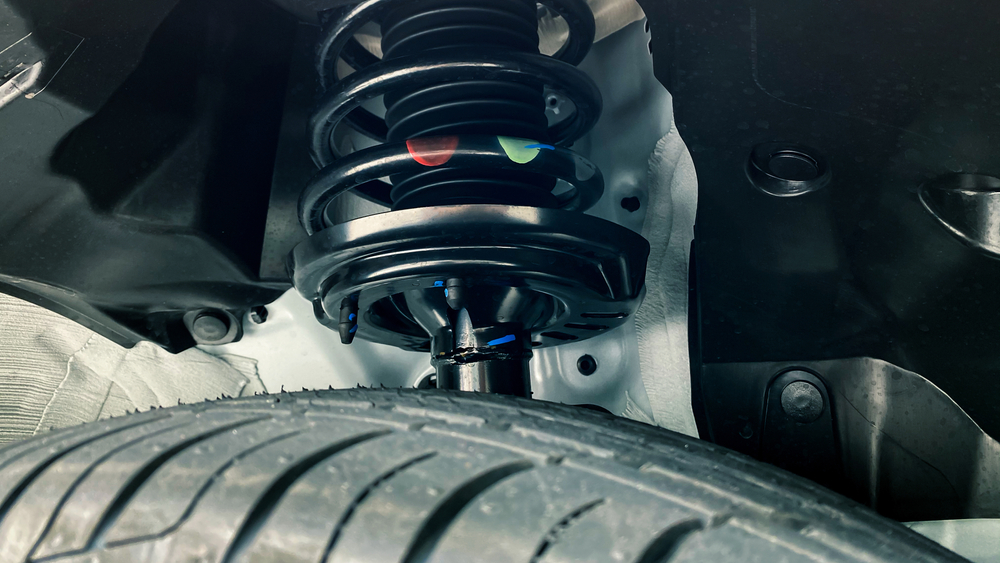
Your suspension contains several components. Two of them carry the greatest load: the spring and the shock absorber. They work together, and neither does its job well without the other.
Coil Springs
Why does your car absorb a bump rather than bounce over it? This is where the coil spring comes in. Fitted to most modern vehicles, it compresses when the wheel strikes an uneven surface and extends to return the wheel to its resting position. That compression is what helps control and reduce the initial impact before the shock absorber manages what follows.
However, coil springs don’t last forever. Wear sets in, and they can sag, crack, or snap altogether. When a spring sags, the car sits lower on one side. A broken spring is a recognised MOT failure point.
Shock Absorbers (Dampers)
A spring compresses and rebounds, and left unchecked, it would keep bouncing. The shock absorber prevents that. Oil is forced through internal valves each time the suspension compresses and extends, slowing the movement and keeping it controlled.
When shock absorbers wear, the signs show up in how the car moves: swaying after bumps, the front dipping under braking, and less composure through bends.
MacPherson Struts
Certain vehicles package the spring and shock absorber into a single unit called a MacPherson strut. The coil wraps around the shock absorber body, and the whole assembly becomes part of the steering and suspension geometry.
Many front-wheel-drive cars use this design. When a strut needs attention, the repair covers the assembly as a whole.
Other layouts exist. Premium and performance vehicles may use double-wishbone or multi-link arrangements where the spring and shock absorber sit apart.
Is your car bouncing more than it used to? Does the front dip noticeably when you brake, or does it feel less composed through corners? These are worth investigating. Our technicians at Roade Main Garage, Northampton, can assess the condition of these components and let you know what needs attention.
Control Arms, Bushings, and Anti-Roll Bars
Springs and shock absorbers manage vertical movement, but the suspension also needs to keep each wheel aligned as it travels up and down. That job falls to control arms, bushings, and anti-roll bars.
Control Arms
Metal links join each wheel assembly to the chassis or subframe. They allow the wheel to travel vertically while holding its position and alignment steady. Wear in the bushings or ball joints at either end of a control arm shifts the geometry. Steering feel, braking balance, and tyre wear all suffer as a result.
Bushings
Rubber sits at every pivot point. Its role: isolate vibration, dampen noise, and permit controlled movement between metal parts. As bushings deteriorate, a knocking sound becomes noticeable when driving over bumps in the road, particularly at lower speeds, steering precision drops, and the car may begin pulling to one side.
A note on pulling: tyre pressures, wheel alignment, and your car’s brakes can also produce it. So accurately diagnosing the issue requires an expert.
Anti-Roll Bar and Drop Links
The anti-roll bar spans the width of the vehicle. It connects left and right suspension, and its function is to reduce lean through corners. Short connecting pieces called drop links attach the bar to the suspension on each side.
Drop links are a well-known wear item and a recognised MOT advisory point. A worn drop link produces a rattling or knocking noise over uneven surfaces. Excessive play in ball joints or a deteriorated dust cover can lead to an MOT advisory or failure depending on severity.
If your vehicle is producing a knocking noise, has uneven tyre wear, or a less comfortable driving experience, the control arms, bushings, or drop links could be the cause. Speak to the team at Roade Main Garage on 01604 862262, and we’ll walk you through the next steps.
Air Suspension: A Different Approach
Certain premium vehicles replace coil springs with an air-based system. Air-filled airbags inflate and deflate at each corner to support the vehicle and manage ride height. Damping still comes from shock absorbers, just as with a standard layout.
Ride height adjusts on the move, and speed changes, road conditions, and driver settings all feed into the system. A compressor pumps air in, and electronic controls balance the pressure at each corner to keep the vehicle level.
The clearest warning sign? The car sitting lower on one corner, or dropping down after sitting overnight. That points to an airbag leak or a valve block fault.
A leaking airbag forces the compressor to run more to maintain pressure. Over time, that extra load accelerates compressor wear.
Repair requires the right knowledge and equipment. Air suspension is electronically controlled, the parts are vehicle-specific, and pinpointing a leak takes experience alongside the correct tooling.
If something doesn’t look or feel right with your vehicle, it’s worth having the system assessed by an expert who knows these setups.
Recognising Worn Suspension: Six Symptoms to Watch For
Suspension wear doesn’t just suddenly appear, it builds gradually over time. And, as it slowly develops, you get used to the small changes day by day. This can let the change go unnoticed until someone else drives the car or something is flagged during the MOT inspection.
What are the signs of worn suspension? Six stand out.
- Clunking or Knocking Noises Over Bumps. A knocking sound each time the wheel crosses a bump or uneven surface. Worn bushings, drop links, or a damaged spring can all be behind it. Lower speeds tend to make it more audible.
- Pulling to One Side. The car drifts left or right without you turning the wheel. Worn control arm bushings or ball joints are one possible cause, though tyre pressures, alignment, and brakes should be ruled out as well.
- Uneven Tyre Wear. Heavy wear on the inner or outer edge of a tyre suggests the wheel isn’t held at the correct angle. Worn suspension parts can shift alignment enough to create that pattern.
- Car Sitting Lower on One Corner. A spring that has sagged or snapped lets one corner drop. On vehicles fitted with air suspension, a leak in the system is another possibility.
- Excessive Body Roll. The car leans noticeably through corners. That suggests the anti-roll bar, drop links, or shock absorbers aren’t managing weight transfer the way they should.
- Front End Dips Under Braking. The nose drops sharply when you apply the brakes. Worn shock absorbers struggling to control the forward weight shift are a likely factor.
Car suspension problems and symptoms can often overlap. Multiple components can contribute to the same sensation you experience behind the wheel.
A single knock could have two or three sources. Having the whole system assessed by an expert beats guessing at individual parts.
If any of that sounds familiar, speak to our team at Roade Main Garage, Northampton, and we’ll check it over for you.
Suspension and the MOT
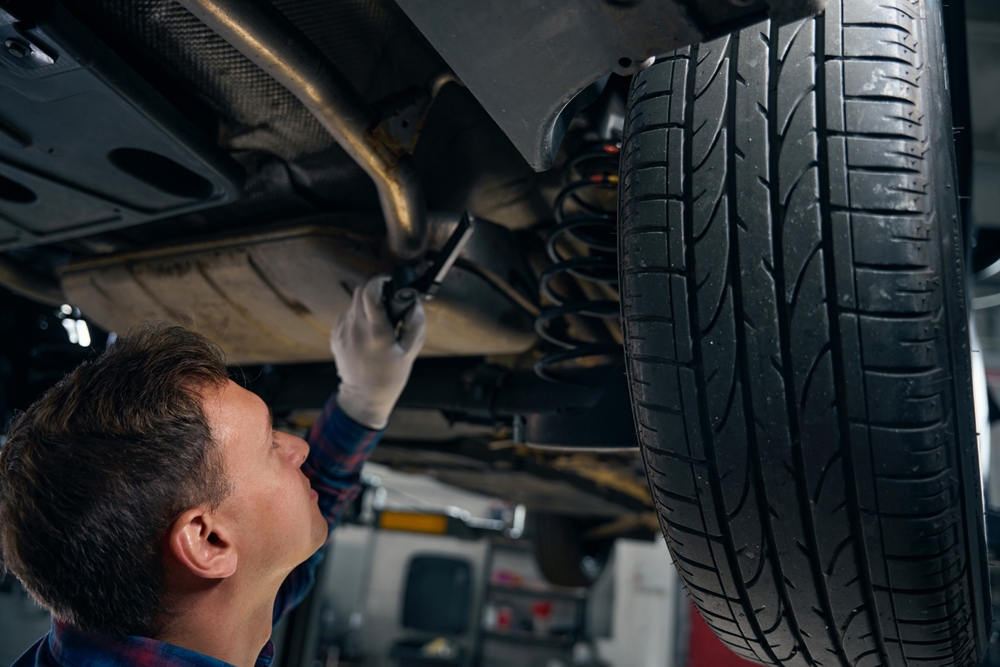
An MOT is a legal requirement in the UK for all vehicles over three years old, and it includes a suspension inspection. Wear and deterioration in suspension parts can result in either an advisory or a failure.
So, what is inspected? During an MOT, your suspension’s ball joints, springs, gaiters, bushings, drop links, and shock absorbers are inspected. Each is flagged where excessive play is found or where wear or damage has progressed enough to raise a concern about safety or roadworthiness.
An MOT sets a minimum legal standard. It captures the vehicle’s condition on that day and nothing more.
If you’re wondering “how long does car suspension last before it becomes a concern?”, the answer depends on the component, the roads you cover, and how the vehicle is driven. If your next MOT is on the horizon, having the suspension assessed in advance gives you time to address anything that might come up.
Why Expert Assessment Matters
Suspension symptoms overlap. A clunking sound over bumps could be a worn bushing, a drop link, or a damaged spring. Pulling to one side could trace back to a control arm, a bushing, or something outside the suspension altogether.
Pinning down the right component before parts are ordered saves time and money. Replacing the wrong piece costs you twice: once for the part that wasn’t needed, and again because the actual fault remains.
An expert technician examines the entire suspension system, checking how each component interacts with its neighbours, pinpointing where the wear sits, and explaining what they’ve found before any work begins.
Now that “how does car suspension work?” has been answered, you’re in a stronger position. You’ll know what questions to ask, and you’ll understand the answers.
Why Choose Roade Main Garage, Northampton, for Your Suspension?
Now that you have the answer to “how does car suspension work?”, it places you in an informed position. You can spot problems earlier and hold a more informed conversation with your technician. The next step is finding somewhere that assesses the full system and gets it right.
Suspension wear builds gradually, and when it’s caught early, issues can be addressed before they deteriorate further, start affecting neighbouring components, or result in an MOT failure.
At Roade Main Garage, Northampton, our technicians have the experience and equipment to thoroughly assess your suspension, identify where wear has developed, and carry out all repairs to the required standard.
- Expert technicians working on your vehicle.
- A 12-month parts-and-labour guarantee on all repairs carried out.
- Courtesy car options available while your vehicle is with us.
Join {{review-count}} local Northampton drivers who’ve rated us {{average-rating}} on Google, with reviews highlighting accurate repairs and excellent value.
Whether you’ve noticed an unusual noise, had an MOT failure or advisory, or just want peace of mind, speak to the team at Roade Main Garage, Northampton, on 01604 862262, and book an expert suspension inspection. Our team will assess your car’s suspension system and let you know where things stand.
Frequently Asked Questions
How does car suspension work?
Springs, shock absorbers, control arms, and bushings work together between the wheels and the body of the car. Springs compress to help control and reduce impacts from road surfaces. Shock absorbers manage the rebound to prevent bouncing.
Control arms and bushings hold each wheel in alignment as the suspension moves. Every part wears at its own pace, so issues tend to build gradually rather than appearing all at once.
What does car suspension do?
It manages the forces that reach the cabin when a wheel hits an imperfection in the road. The system keeps tyres pressed to the tarmac for effective braking and steering, limits body roll through corners, and absorbs the impact of bumps and potholes so the cabin stays stable. Remove it, and every crack in the road would be felt directly through the vehicle.
What are the signs of worn suspension?
Knocking or clunking noises over bumps, the car drifting to one side, uneven tyre wear, one corner sitting lower than the rest, excessive lean through corners, and the nose dropping sharply under braking. These develop gradually, and more than one component can produce the same symptom. A full system assessment at Roade Main Garage is the clearest way to identify the source.
How long does car suspension last?
Each component has its own lifespan. Springs last longer in many cases, but remain subject to fatigue and corrosion.
Bushings and drop links can wear sooner, influenced by road quality and driving style. No single figure applies across the board, which is why periodic inspections matter.
Can worn suspension cause an MOT failure?
Yes, worn suspension can cause an MOT failure. Springs, shock absorbers, ball joints, bushings, drop links, and gaiters are all inspected during the MOT. Where wear or damage has progressed enough to compromise safety or roadworthiness, the result is recorded as an advisory or a failure. Having your suspension checked ahead of the test gives you time to address anything that needs attention on your own terms.